
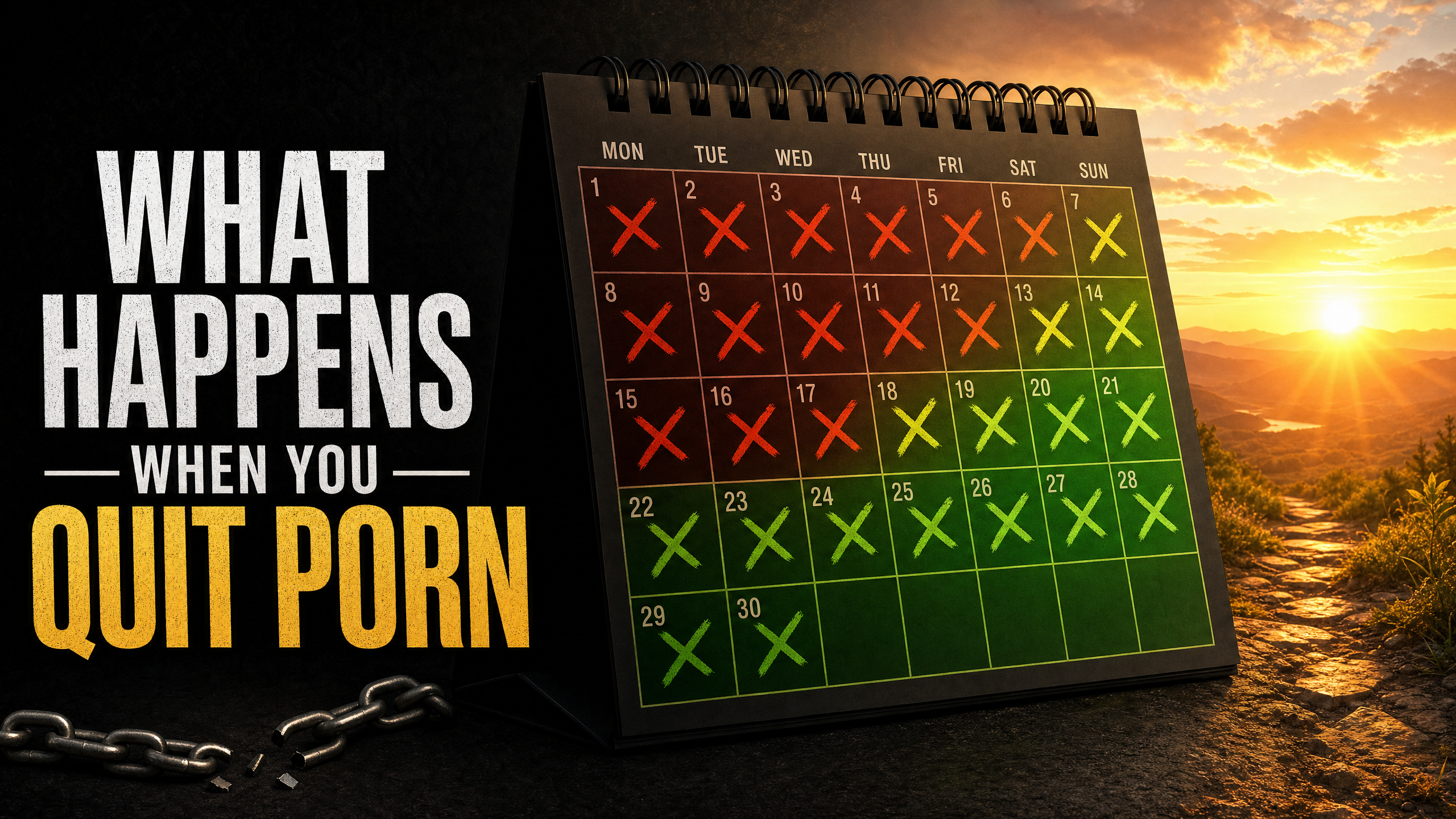
What happens when you quit porn? The experience can be different for everyone. Some people notice stronger cravings, mood changes, sleep problems, or difficulty concentrating during the first few days or weeks. Others may experience only mild changes or no noticeable withdrawal-like symptoms at all. If pornography has become difficult to control or is affecting your relationships, work, studies, or everyday life, taking a break can help you understand your habits and identify your triggers.
In this guide, we’ll explain what you may experience after quitting porn, from the first few days through the following weeks and months. You’ll also learn about withdrawal-like symptoms, the “flatline,” possible benefits, relapse prevention, practical tips, and when professional help may be useful.
TL;DR
- Days 1-3: Cravings and urges may become more noticeable, especially around your usual viewing times.
- Days 4-7: Some people experience irritability, restlessness, difficulty concentrating, or sleep changes.
- Week 2: Cravings may continue, but triggers and routines often become easier to recognize.
- Weeks 3-4: Some people report better control over urges and more awareness of their habits.
- Month 2-3: New routines can become easier to maintain, although occasional cravings may still happen.
- 90+ days: There is no fixed biological finish line. Progress depends on the individual.
- Most important: Focus on changing the habits and triggers behind problematic use rather than chasing a specific number of days.
Why Can Quitting Feel Difficult?
If you regularly use pornography as a way to cope with boredom, stress, loneliness, anxiety, or other emotions, stopping can feel uncomfortable because you are removing a familiar behavior.
Research on problematic pornography use has reported withdrawal-like experiences, particularly cravings. However, researchers are still debating how these symptoms should be understood and whether problematic pornography use should be considered an addictive disorder in the same way as substance addictions.
The World Health Organization recognizes Compulsive Sexual Behaviour Disorder (CSBD) in ICD-11 as an impulse-control disorder. This does not mean that every person who watches pornography has a disorder. The key issue is persistent difficulty controlling the behavior and significant distress or impairment in important areas of life.
Is Porn Withdrawal Real?
The term “porn withdrawal” is commonly used online, but the science needs some context.
A 2023 scoping review examined withdrawal-like symptoms reported in people with problematic pornography use. Across the studies reviewed, craving was one of the most commonly reported experiences and was frequently linked with relapse. At the same time, the researchers noted that the question of whether problematic pornography use should be understood as an addictive disorder remains debated.
So, it is more accurate to say that some people experience withdrawal-like symptoms when they stop problematic pornography use rather than saying everyone will experience a medically established withdrawal syndrome.
Possible experiences include:
- Strong cravings
- Irritability
- Restlessness
- Difficulty concentrating
- Changes in mood
- Sleep difficulties
- Increased thoughts about pornography
- Feeling uncomfortable during usual trigger situations
Not everyone experiences these symptoms, and their intensity can vary.
Detailed Withdrawal Timeline
Days 1-3: Breaking the Routine
The first few days can be difficult mainly because you are changing an established routine.
If you normally watched pornography at night, while alone, after work, or when bored, those situations can suddenly become strong reminders of the old behavior.
You may notice:
- Strong urges to watch pornography
- Frequent thoughts about pornography
- Boredom or restlessness
- Irritability
- Difficulty avoiding familiar triggers
- A strong desire to return to your normal routine
What to Do
Instead of relying only on willpower, change your environment.
Try:
- Staying away from your usual triggers
- Keeping your phone away from your bed
- Staying busy during your normal viewing time
- Going outside or exercising
- Spending time with friends or family
- Using website or content-blocking tools
The goal is not to eliminate every thought about pornography. The goal is to avoid automatically acting on those thoughts.
Days 4-7: Cravings and Triggers
During the first week, you may start noticing exactly when and why your urges appear.
For some people, cravings can be strongest during situations such as:
- Late nights
- Being alone
- Stress
- Boredom
- Social media use
- Lying in bed with a phone
- Emotional discomfort
Instead of thinking, “I need to stop thinking about porn,” ask:
“What happened immediately before this craving?”
Identifying the trigger can make future urges easier to manage.
Week 2: Learning Your Triggers
By the second week, you may have a better understanding of your patterns.
You may still experience cravings, but you may also begin recognizing that an urge does not automatically require action.
Keep tracking:
- When cravings happen
- What triggers them
- How long they last
- What helped you avoid acting on them
Remember that there is no universal day when withdrawal symptoms “end.” Some people may notice improvement quickly, while others may continue experiencing urges for longer.
Weeks 3-4: Building New Habits
At this stage, the main challenge may shift from simply resisting pornography to building a lifestyle that does not depend on it.
You may notice:
- Better awareness of your triggers
- More confidence managing urges
- More time available for other activities
- Fewer automatic viewing habits
- Better control over your daily routine
However, feeling better does not mean you should assume that one return to pornography will have no effect on your goals.
Continue working on the habits that helped you reach this point.
Month 2-3: Strengthening Your New Routine
There is no scientifically proven “Month 2-3 rewiring phase” that happens in exactly the same way for everyone.
However, if you continue changing your habits, you may become more comfortable with your new routine.
You may focus on:
- Managing stress without pornography
- Improving sleep
- Exercising regularly
- Spending more time socially
- Developing hobbies
- Improving relationships
- Managing sexual urges in healthier ways
The important change is not a particular number on a streak counter. It is whether you are gaining better control over your behavior.
What Is the “Flatline”?
“Flatline” is a term commonly used in online pornography-recovery communities to describe a period when someone experiences temporarily reduced sexual desire, arousal, or interest after stopping pornography.
Some people report this experience, while others do not.
It is important not to treat “flatline” as a formally established medical stage that everyone goes through.
Changes in libido can have many possible causes, including stress, anxiety, relationship issues, sleep, medications, physical health, and normal fluctuations in sexual desire.
If a major or persistent change in sexual function concerns you, speaking with a healthcare professional is more appropriate than assuming it is automatically a “flatline.”
Does Everyone Recover at the Same Speed?
No. There is no single timeline that applies to everyone.
Your experience may depend on:
- How frequently you used pornography
- How long the behavior has been part of your routine
- Whether you use it to cope with stress or difficult emotions
- Your personal triggers
- Your sleep and lifestyle
- Your relationships
- Your mental health
- Whether you have other compulsive behaviors
Research into problematic pornography use is still developing, and treatment studies have limitations. A 2024 systematic review found promising evidence for psychological approaches but rated the overall evidence as low or very low because many studies had methodological limitations.
So avoid comparing your progress with someone else’s “30-day,” “60-day,” or “90-day” story.
What Benefits Are Supported by Research?
People often make large claims about what happens after quitting pornography.
Some claims are stronger than the available evidence.
Research suggests that problematic pornography use can be associated with psychological and sexual difficulties in some people, but the relationship is complex and does not prove that pornography is the direct cause of every problem.
Potential benefits of reducing or stopping problematic use may include:
Better Control Over Your Behavior
If pornography has become difficult to control, reducing use may help you regain a sense of control over your routine.
More Time
If pornography was taking significant amounts of time, replacing it with other activities can create more time for work, exercise, hobbies, or relationships.
Better Awareness of Triggers
Taking a break can help you understand whether boredom, stress, loneliness, or other situations are driving the behavior.
Possible Improvements in Sexual Function
Some people seek help because they believe pornography is affecting their sexual experiences. Research in this area is mixed, and erectile function has many possible causes. One large study found that pornography frequency was not independently associated with erectile dysfunction severity after accounting for other factors.
Therefore, quitting pornography should not be presented as a guaranteed treatment for erectile dysfunction.
Porn vs. Masturbation: What Is the Difference?
Quitting pornography and quitting masturbation are not the same thing.
Pornography is sexual media or content. Masturbation is a sexual behavior.
Someone can:
- Stop pornography but continue masturbating
- Stop both pornography and masturbation
- Reduce pornography use without changing masturbation
- Use pornography without masturbating
The right goal depends on the individual and the reason they want to change their behavior.
If pornography is the specific behavior causing problems, focusing on pornography may make more sense than assuming that every form of masturbation needs to stop.
Research also suggests that pornography use and masturbation frequency do not have simple, universal relationships with sexual functioning. Different factors can influence sexual health, including age, physical health, mental health, relationship satisfaction, and sexual interest.
How to Prevent a Relapse
A relapse does not mean that all your progress has disappeared.
Instead of treating one setback as failure, look at what caused it.
Ask yourself:
- What was happening before the relapse?
- Where were you?
- What were you feeling?
- What device were you using?
- Were you tired, stressed, lonely, or bored?
- What could you change next time?
Make Your Environment Safer
You can reduce opportunities for impulsive behavior by:
- Blocking adult websites
- Removing saved content
- Unfollowing triggering accounts
- Keeping your phone away from your bed
- Avoiding private browsing when it is a trigger
- Spending less time alone during high-risk periods
Have a Plan for Cravings
When an urge appears:
- Delay acting on it.
- Leave the place where the trigger occurred.
- Put your phone away.
- Do another activity.
- Exercise or take a walk.
- Contact someone you trust.
- Remind yourself why you wanted to change.
The goal is to create enough distance between the craving and your behavior to make a conscious decision.
Practical Tips to Make Quitting Easier
1. Identify Your Triggers
Write down when, where, and why you usually feel the urge to watch pornography, such as during stress, boredom, loneliness, or late nights.
2. Change Your Routine
Replace your usual pornography-watching time with a healthy activity like exercise, reading, hobbies, or spending time with others.
3. Use Content Blocking
Use website and content blockers to limit easy access to pornography and reduce the chance of making impulsive decisions.
4. Exercise Regularly
Exercise can give you another activity to focus on and may help support overall physical and mental well-being.
5. Improve Your Sleep
Get enough sleep to manage cravings, improve focus, and maintain healthy daily routines every day.
6. Stay Social
Loneliness can become a trigger for some people. Spend more time with friends, family, or supportive communities.
7. Track Your Progress
Instead of only tracking a streak, track:
- Cravings
- Triggers
- Mood
- Sleep
- Successful coping strategies
This gives you more useful information than a number of days alone.
8. Replace the Habit
Do not simply remove pornography. Replace the time with something meaningful:
- Exercise
- Reading
- Learning
- Work
- Creative activities
- Hobbies
- Social activities
When Should You Seek Professional Help?
Consider speaking with a qualified mental health or healthcare professional if:
- You repeatedly try to stop but cannot control the behavior.
- Pornography is interfering with work or studies.
- It is damaging important relationships.
- You spend significant amounts of time searching for or watching pornography.
- You use pornography mainly to cope with severe stress or emotional problems.
- Your sexual functioning is causing ongoing concern.
- You experience significant distress related to your behavior.
Compulsive Sexual Behaviour Disorder is recognized in ICD-11, but simply watching pornography frequently does not automatically mean that someone has CSBD. A professional assessment considers loss of control and significant impairment or distress rather than frequency alone.
Treatment research is still developing, but psychological approaches such as cognitive behavioral therapy have shown promising results for problematic pornography use. A 2025 meta-analysis found that psychotherapy improved problematic pornography use, frequency/duration of use, and sexual compulsivity compared with controls, although the evidence base still has limitations.
Conclusion
Quitting pornography can be a personal process, and everyone may experience it differently. Some people may notice cravings, mood changes, difficulty concentrating, or other challenges during the first few days or weeks, while others may experience fewer changes. Building healthy routines, identifying triggers, getting enough sleep, exercising, and using content blockers can make the process easier. It is also important not to focus too much on fixed timelines or expect the same results as someone else. Progress may take time, and setbacks can happen without meaning that you have failed. If pornography use feels difficult to control or is affecting your daily life, relationships, work, or emotional well-being, consider speaking with a qualified mental health professional for personalized support.
People are also reading:
- How to Build Better Digital Habits
- Why Blocking Distractions Beats Willpower for Better Focus
- App Blocking vs Willpower
- Why We Keep Opening Apps Without Thinking
- How Digital Triggers Shape Your Daily Habits
Frequently Asked Questions
1. What happens when you quit porn?
You may experience cravings, mood changes, difficulty concentrating, or changes in sleep during the first few days or weeks. Experiences vary from person to person.
2. Is porn withdrawal real?
Some people report withdrawal-like symptoms such as cravings, irritability, restlessness, or difficulty concentrating. However, not everyone experiences these symptoms.
3. What is the flatline after quitting porn?
A “flatline” is a term some people use for a temporary period of low sexual desire, motivation, or emotional changes after stopping pornography. It does not happen to everyone.
4. Does everyone recover at the same speed?
No. Recovery can vary depending on individual habits, frequency of use, triggers, lifestyle, and other personal factors. There is no fixed recovery timeline.
5. Can quitting porn improve your life?
Some people report better focus, improved relationships, greater confidence, or healthier routines after reducing or stopping pornography. Results can vary between individuals.
6. What should you do if you relapse?
A relapse does not mean you have failed. Identify what triggered the behavior, adjust your routine, and continue working toward your goals without giving up.

Related Articles

BlockerPlus blocks content, tracks your streak, and keeps you accountable, free on Android & iOS.
Download Free