
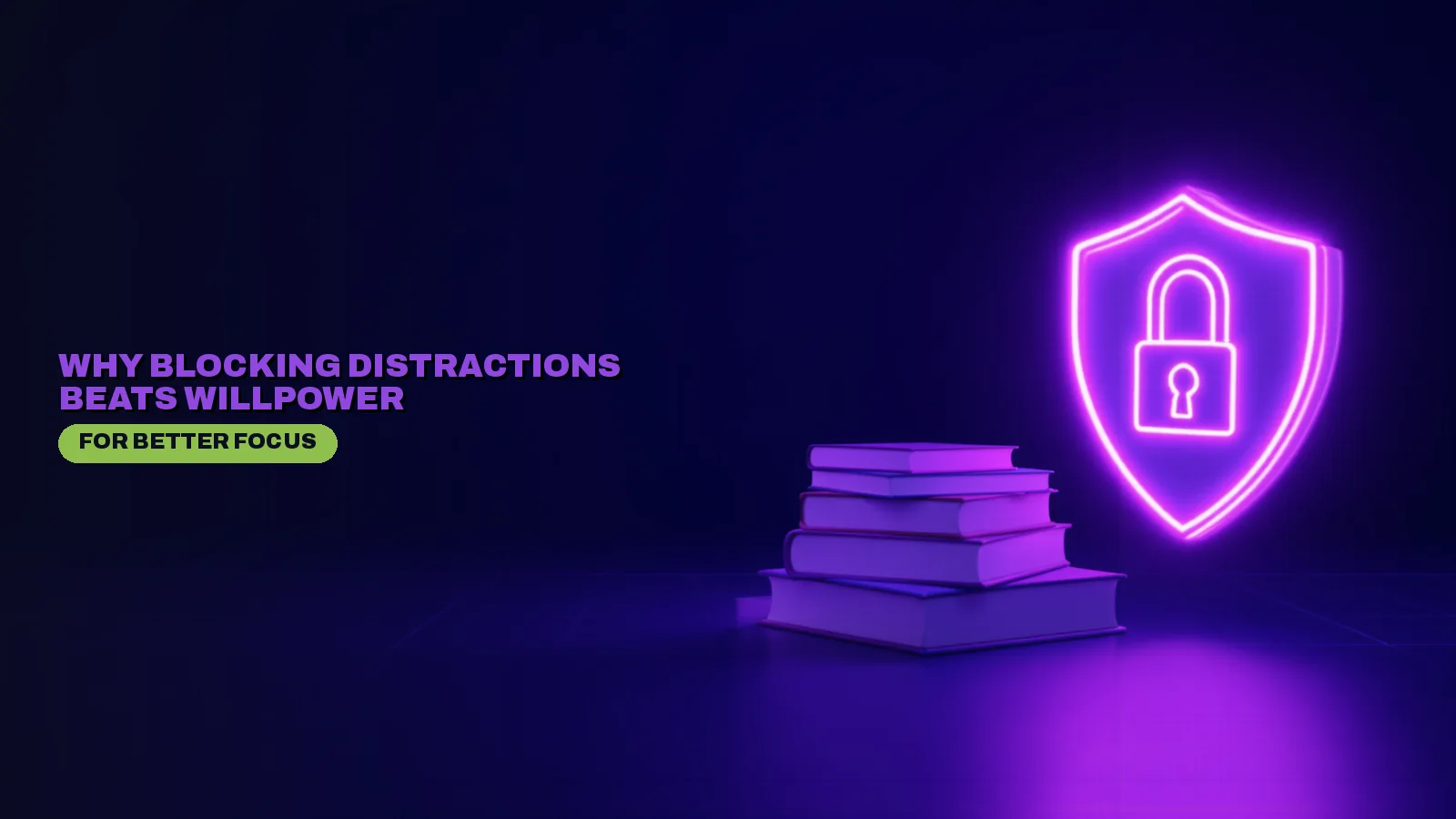
Staying focused is not always a matter of having enough discipline. When distracting websites, social media apps, notifications, and entertainment are always one click away, you may have to make the same self-control decision again and again. Blocking distractions changes the situation before that decision is needed. Instead of constantly telling yourself not to check something, you can reduce access to it and create an environment that supports the task you want to finish.
Why Willpower Alone Is Not Enough
Willpower is useful because it helps you resist short-term temptations when they conflict with a longer-term goal. However, relying on willpower for every distraction can make focus harder because you are repeatedly asking yourself to ignore something that is designed to attract your attention. The American Psychological Association notes that avoiding temptation and planning ahead can support self-control, rather than depending only on resistance in the moment.
A better approach is to reduce how often you need to use willpower in the first place. If a distracting website is blocked during work hours, you do not have to repeatedly decide whether to open it. If unnecessary notifications are turned off, fewer interruptions reach you while you are working. These small changes can reduce the number of self-control decisions you face during the day.
How Distractions Affect Your Focus
Digital distractions do more than take away the few seconds needed to check a notification or open an app. They can interrupt the attention you were giving to a task and make it harder to return to the same level of concentration. Research on attention and self-control shows that tempting and distracting stimuli can increase errors and reaction times during tasks.
This is why a distraction can be costly even when you only look at it briefly. A quick social media check can turn into several minutes of scrolling, while switching between work and entertainment repeatedly can make a focused work session feel much longer and less productive.
How Blocking Distractions Reduces Temptation
Blocking works by changing the situation around you rather than asking you to fight every temptation after it appears. Research on self-control has found that people can use situation selection and situation modification to prevent self-control conflicts before they occur.
Blocking Removes the Need to Make the Same Decision Again
When access to a distracting website or app is available at any moment, you may repeatedly face the same choice: should I stay focused or check it? Blocking removes or delays that easy access, so the decision becomes less immediate. This can be useful during study, work, writing, or any activity where uninterrupted attention matters.
The goal is not to eliminate personal responsibility or self-control. Instead, blocking creates a condition where your intended behavior is easier to maintain. You can spend your attention on the task instead of repeatedly negotiating with yourself about whether to take another quick break.
Increasing Friction Makes Distractions Less Convenient
Many digital distractions are powerful partly because they are convenient. Opening an app, checking a feed, or visiting a website may require only a tap or a few seconds. Adding friction changes that process by making the unwanted action less immediate and therefore easier to postpone.
For example, scheduled blocking can prevent access during important work periods, while signing out of unnecessary accounts or moving distracting apps away from the home screen can create additional steps. These changes do not guarantee perfect focus, but they can make impulsive checking less automatic.
Proactive Self-Control Starts Before Temptation Appears
One of the strongest reasons to block distractions is that you can act before the temptation becomes a problem. Instead of waiting until you are already distracted and then trying to recover your focus, you can decide in advance which websites, apps, notifications, or other interruptions should be unavailable during a focus period.
This approach is consistent with research showing that more self-controlled behavior can involve proactively choosing or changing situations to reduce exposure to temptation.
How to Design a Digital Environment for Better Focus
Your digital environment can influence how easy it is to stay focused. If entertainment, social media, messages, and unrelated notifications are constantly visible, you have more opportunities to move away from the task. A focus-friendly environment does not need to be complicated; it simply needs to make your intended activity easier and unnecessary distractions less accessible.
You can start by making a few practical changes:
- Remove distracting apps from your main home screen.
- Turn off non-essential notifications.
- Keep work-related tools easy to access.
- Sign out of websites that you repeatedly check without a clear reason.
- Use blocking during periods when you need uninterrupted attention.
- Keep your phone away from your immediate workspace when possible.
The principle is simple: reduce unnecessary choices around the task you want to complete. Research on self-control supports avoiding tempting situations as one useful strategy for maintaining goal-directed behavior.
How to Block Distractions in Everyday Digital Life
Distraction blocking can be applied at different levels depending on what usually interrupts you. Some people mainly struggle with social media apps, while others lose time on video platforms, news websites, games, shopping sites, or constant notifications. Start by identifying the sources that actually interfere with your routine instead of blocking everything.
For everyday use, you can consider:
- Block distracting apps on your phone: Restrict apps that you frequently open when you should be working, studying, or resting.
- Block distracting websites in your browser: Prevent access to websites that repeatedly pull you away from important tasks.
- Use device-level blocking when you need stronger control: A broader restriction can help when switching between browsers, apps, or devices makes simple blocking easy to avoid.
- Block distractions during specific focus hours: Scheduling restrictions can be useful when you have predictable study, work, writing, or exercise periods.
The right level of blocking depends on your habits. A useful system should reduce unnecessary distractions without making normal work unnecessarily difficult.
How to Build a Distraction-Free Focus Session
Blocking works better when it is part of a clear focus routine rather than a standalone action. Before beginning, decide what you want to accomplish, identify the distractions most likely to interrupt you, and create a defined period for focused work. This gives your attention a specific direction instead of simply telling yourself to “focus.”
A simple focus session can follow these steps:
- Choose your most important task first. Decide what needs your attention before opening unrelated apps or websites.
- Set a dedicated focus block. Give yourself a defined period in which the main goal is to work on one task.
- Block your biggest distractions before starting. Do not wait until you are already tempted to change your environment.
- Take planned breaks without returning to distracting apps. Use breaks to rest, move around, drink water, or reset your attention rather than automatically starting an endless scroll.
Planning ahead can reduce the need to make decisions during the task. The APA describes advance planning, including “if-then” plans, as one strategy that can help people respond to tempting situations without relying entirely on willpower in the moment.
How to Make Distraction Blocking Actually Work
A blocker is most useful when it matches your actual habits. If you block dozens of websites that rarely distract you but ignore the two apps you constantly check, the system may add inconvenience without solving the main problem. Start with the distractions that have the biggest effect on your attention and adjust the restrictions as you learn what works for you.
Start With the Distractions That Affect You Most
Identify the websites and apps that most often interrupt your work or study. You do not need to block everything immediately. Focusing on your biggest sources of distraction can make the system easier to maintain and help you understand which restrictions actually improve your routine.
Use Scheduled Blocking Instead of Manual Blocking
Manual blocking requires you to remember to turn restrictions on each time you begin working. Scheduled blocking can remove that extra decision by applying restrictions during the hours you choose. This is particularly useful when your work, study, or focus periods follow a regular schedule.
Add Stronger Restrictions When Basic Blocking Is Not Enough
Some distractions are easy to avoid once access is reduced, while others are habits you repeatedly return to. If basic restrictions are easy to disable, consider using stronger settings or longer scheduled blocks. The purpose is to create enough friction that you have time to reconsider before returning to the distracting activity.
Keep Essential Websites and Apps Accessible
Effective blocking should not make normal work difficult. Keep the tools you genuinely need available, especially communication, research, work, education, banking, or other essential services. A focused environment should remove unnecessary interruptions while allowing you to complete the task you originally intended to do.
Common Mistakes That Make Distraction Blocking Fail
Blocking can be useful, but it is not automatically effective in every situation. Problems usually appear when restrictions are too broad, incomplete, difficult to maintain, or treated as a replacement for every other focus habit. A practical system should be specific enough to reduce distractions without creating unnecessary frustration.
Blocking Too Many Websites and Apps at Once
If you block everything without considering what you actually need, you may make ordinary tasks harder and eventually disable the entire system. Start with the distractions that consistently interfere with your goals, then expand the list only when there is a clear reason.
Blocking Only One Source of Distraction
Blocking social media may not help much if you immediately replace it with video platforms, news sites, games, or messaging apps. Look at the behavior behind the distraction rather than focusing on only one website or application. If several platforms serve the same avoidance habit, your approach may need to address more than one source.
Making Blocks Too Strict Without Planned Breaks
A focus system that leaves no room for breaks can become difficult to follow. Planned breaks give you an opportunity to rest without turning every pause into unrestricted access to distracting content. The goal is controlled access, not constant restriction.
Relying on Blocking Without Building Better Habits
A blocker can reduce exposure to distractions, but it does not automatically teach you how to prioritize tasks, manage your time, or recover from interruptions. Use blocking alongside clear goals, focused work periods, reasonable breaks, and routines that support the behavior you want to maintain.
When Willpower Still Has a Role
Blocking distractions does not make willpower irrelevant. Unexpected interruptions can still happen, and some situations cannot be controlled through an app or website restriction. You may also need self-control when working in a shared environment, using another person’s device, attending a meeting, or dealing with distractions that cannot simply be blocked.
The practical goal is to combine both approaches. Use environmental changes to reduce unnecessary temptations, then use willpower and good judgment when something unexpected requires your attention. Research on self-control increasingly examines how people can proactively shape situations rather than relying only on resisting temptations after they appear.
How BlockerPlus Can Help Reduce Digital Distractions
BlockerPlus can support a more controlled digital environment by helping users reduce access to distracting websites and apps. Instead of depending entirely on the decision to ignore a distraction every time it appears, you can use blocking as part of a broader focus routine.
You can use a distraction-blocking approach to:
- Block distracting websites and apps.
- Reduce easy access to common distractions.
- Create a more controlled digital environment.
- Support consistent focus habits.
The purpose is not to replace self-control. It is to make the digital environment more supportive of the goals you have already decided to follow.
Conclusion
Blocking distractions works by changing the conditions around your behavior instead of asking you to resist every temptation after it appears. When distracting websites and apps are less accessible, you have fewer opportunities to make the same decision repeatedly, and your attention can remain directed toward the task that matters.
Willpower still has value, but it does not have to carry the entire burden of staying focused. Combining reasonable blocking, advance planning, clear priorities, scheduled focus periods, and healthy digital habits can create a more practical approach to managing distractions. Avoiding temptation and shaping your environment are established self-control strategies, not signs that you lack discipline.
People are also reading:
- How to Break Phone Addiction
- How to Stop Doomscrolling
- Can Website Blockers Be Bypassed
- Can VPN Bypass a Porn Blocker
- How Porn Can Lead to Anger
Frequently Asked Questions
1. Why does blocking distractions work better than willpower?
Blocking can reduce the need to repeatedly resist the same temptation. Instead of seeing a distracting app or website and deciding not to open it every few minutes, you can reduce access before the distraction appears. This can make it easier to stay focused on the task you have already chosen.
2. Can blocking distractions really improve focus and productivity?
Blocking can support focus by reducing interruptions and making distracting activities less accessible. However, it is not a guaranteed productivity solution on its own. Clear priorities, realistic work periods, planned breaks, and consistent habits still matter when building a focused routine.
3. Why is it difficult to rely on willpower to avoid distractions?
Willpower requires you to actively resist an unwanted action whenever the temptation appears. When distractions are frequent and easily accessible, you may face that decision repeatedly throughout the day. Reducing exposure can lower the number of situations in which you need to rely on active resistance.
4. How does blocking distracting apps and websites reduce temptation?
Blocking adds a barrier between you and the activity you want to avoid. That barrier may prevent immediate access or create enough extra effort to interrupt an automatic checking habit. This gives you more opportunity to return your attention to the task instead of acting on the first impulse.
5. Is blocking distractions better than simply trying to ignore them?
Blocking and ignoring serve different purposes. Ignoring requires you to notice a distraction and deliberately keep your attention elsewhere, while blocking changes access before the distraction becomes available. Using both approaches can be helpful, especially when certain websites or apps repeatedly interfere with your focus.
6. Can a distraction blocker help build better digital habits?
A distraction blocker can support better habits by making unwanted digital activities less convenient during specific periods. Over time, this can help create a more predictable routine around work, study, or rest. The strongest results come when blocking is combin

Related Articles

BlockerPlus blocks content, tracks your streak, and keeps you accountable, free on Android & iOS.
Download Free