
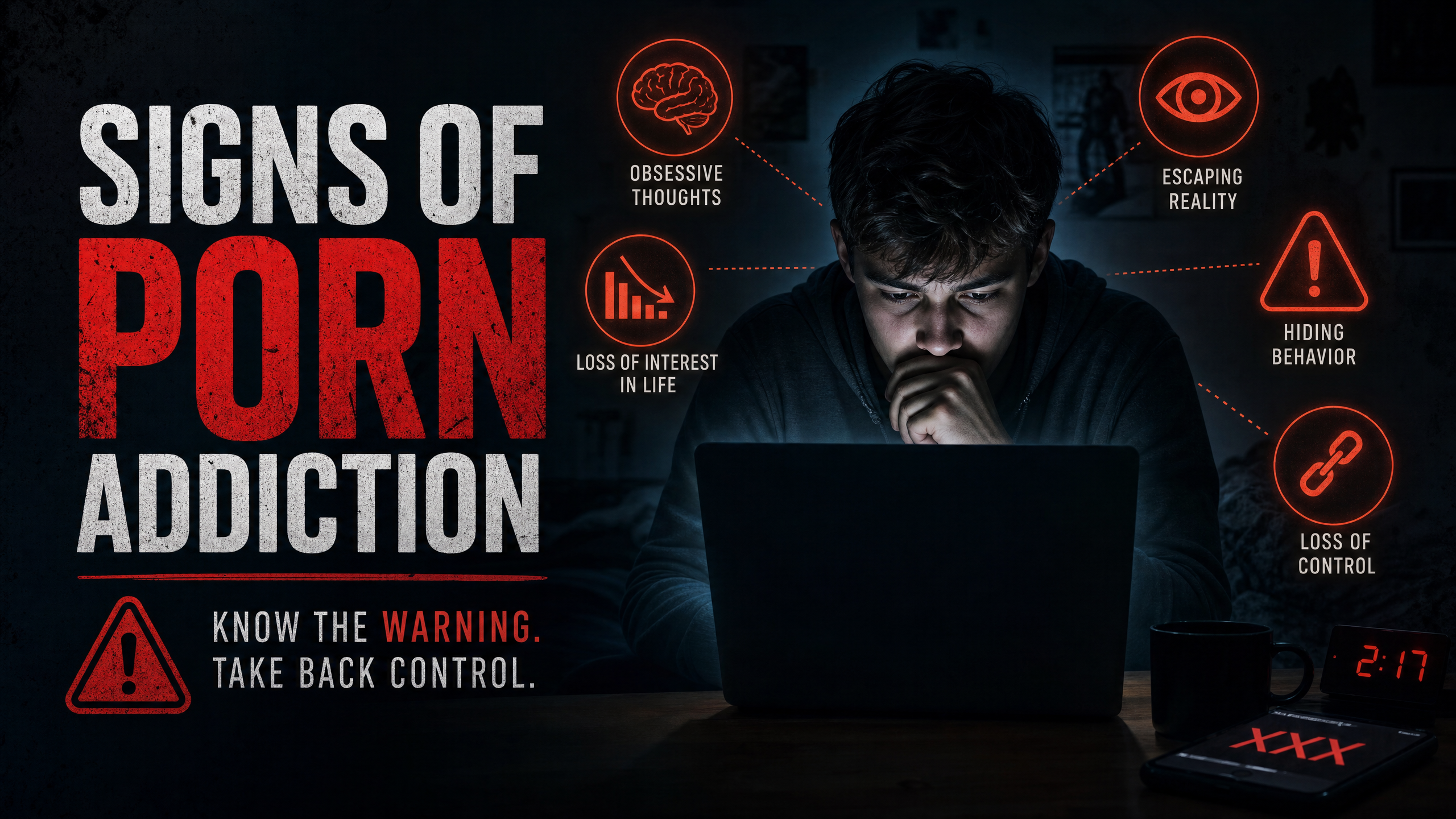
“Porn addiction” is a commonly used term for pornography use that feels difficult to control. Clinically, problematic pornography use can occur within the broader context of Compulsive Sexual Behaviour Disorder (CSBD), which the World Health Organization includes in ICD-11.
The most important warning signs are not simply how often someone watches pornography. They include difficulty controlling the behavior, repeated unsuccessful attempts to cut back, spending excessive time on it, persistent preoccupation, using it to cope with difficult emotions, and continuing despite meaningful consequences.
If these patterns are affecting your work, studies, relationships, sleep, or well-being, it may be worth taking a closer look at the behavior and considering professional support.
What Is Porn Addiction?
“Porn addiction” is a commonly used phrase for pornography use that a person feels unable to control. It is not, by itself, the name of a formal diagnosis.
The World Health Organization recognizes Compulsive Sexual Behaviour Disorder (CSBD) in ICD-11. CSBD involves a persistent pattern of difficulty controlling repetitive sexual behavior that continues despite negative consequences and results in significant impairment or distress.
Pornography may be part of that behavior, but frequent pornography use alone does not mean someone has CSBD.
The key question is whether the behavior has become difficult to control and disruptive to important areas of life.
Frequent Porn Use vs. Problematic Porn Use
There is no specific number of times per week or month that automatically makes pornography use a disorder.
Instead, consider:
- Can you stop or cut back when you decide to?
- Do you repeatedly return to the behavior despite trying to change it?
- Does it take more time than you intended?
- Does it interfere with responsibilities or relationships?
- Do you continue despite meaningful consequences?
- Has it become your main way of coping with difficult emotions?
These factors provide more useful context than frequency alone.
Why Recognizing the Signs Matters
Problematic behavior can develop gradually. A pattern that initially feels manageable may become more difficult to control as it becomes connected to certain emotions, routines, or situations.
Recognizing the signs can help you:
- Identify patterns and triggers
- Set realistic boundaries
- Protect your time and responsibilities
- Change routines that reinforce the behavior
- Decide whether additional support would be useful
The purpose of recognizing these signs is not to diagnose yourself. It is to understand whether your pornography use has started interfering with your life.
Signs of Problematic Porn Use
The following signs are worth paying attention to when they occur repeatedly or begin affecting daily functioning. One sign by itself does not establish a diagnosis.
1. Difficulty Controlling Porn Use
You may decide to watch for a short time but continue much longer than planned. You may also find yourself watching when you had already decided not to.
Repeated difficulty following your own limits can be an important warning sign.
2. Repeated Attempts to Stop or Cut Back
You may have tried several times to reduce or stop your pornography use but repeatedly return to the same pattern.
An unsuccessful attempt does not automatically mean there is a disorder. The concern is a persistent pattern in which attempts to change repeatedly fail.
3. Spending More Time Than Intended
Pornography may begin taking up more time than you planned.
You might spend a long time searching for content, continue watching instead of sleeping, or delay work, studies, exercise, or other activities.
The issue is not simply the number of minutes involved. It is whether the time spent is interfering with the rest of your life.
4. Persistent Preoccupation
You may find yourself thinking about pornography frequently, planning when you can watch, or having difficulty focusing on other activities because of those thoughts.
Sexual thoughts are normal. The concern is when preoccupation becomes persistent and interferes with concentration or everyday responsibilities.
5. Using Pornography to Cope With Difficult Emotions
Some people turn to pornography when they feel stressed, lonely, bored, anxious, or emotionally overwhelmed.
If pornography becomes your primary or automatic response to difficult emotions, the behavior may become harder to change because the emotional trigger and the behavior become closely connected.
6. Neglecting Responsibilities
Pornography use can become problematic when it repeatedly takes priority over important responsibilities.
This may include:
- Delaying work or studies
- Missing deadlines
- Skipping planned activities
- Ignoring household responsibilities
- Staying awake late to watch pornography
Repeated interference with responsibilities is more significant than an isolated incident.
7. Continuing Despite Negative Consequences
You may recognize that pornography use is creating problems but continue the behavior anyway.
Consequences can involve:
- Work or academic performance
- Relationships
- Sleep
- Daily routines
- Emotional well-being
The important pattern is continuing despite recognizing that the behavior is causing meaningful problems.
8. Secrecy or Deception Around Porn Use
You may hide your pornography use because you feel embarrassed or concerned about how others will respond.
Privacy by itself is not a sign of addiction. However, repeated deception or secrecy that contributes to relationship conflict can indicate that the behavior deserves closer attention.
9. Problems in Intimate Relationships
For some people, problematic pornography use occurs alongside relationship difficulties.
You might experience conflict about pornography, reduced engagement with a partner, or difficulty communicating about sexual expectations.
These problems can have many causes, so they should not automatically be attributed to pornography.
10. Seeking Increasingly Novel Content
Some people notice changes in the type or variety of pornography they seek over time, including spending more time searching for new material.
This should not be treated as a standalone sign of addiction. It becomes more relevant when it occurs alongside loss of control, increasing time spent, or other problems.
11. Using Pornography in Inappropriate Situations
Watching pornography during work, school, or other situations where it interferes with responsibilities can indicate that personal boundaries are becoming difficult to maintain.
The concern is particularly strong when you recognize the situation is inappropriate but repeatedly struggle to stop.
How to Tell If Porn Use Has Become a Problem
Instead of focusing on a single symptom, look at the overall pattern.
Ask yourself:
| Question | What it can help you understand |
| Can I stop when I decide to? | Your level of control |
| Have I repeatedly tried to cut back? | Whether the pattern persists despite your intentions |
| Does it interfere with responsibilities? | Its effect on daily functioning |
| Do I spend more time than planned? | Whether the behavior is becoming disruptive |
| Do I use it mainly to cope with emotions? | Whether it has become a coping strategy |
| Do I continue despite problems? | Whether consequences are changing your behavior |
| Is it affecting important relationships? | Its broader impact on your life |
If several of these concerns apply and the pattern is persistent, consider discussing it with a qualified mental-health professional.
Why Porn Use Can Become Compulsive
There is no single explanation for why pornography use becomes difficult to control. Several behavioral and environmental factors can contribute.
Easy Access
Pornography is available quickly and privately through internet-connected devices. When access is always available, acting on an urge can require very little effort.
Habit and Reinforcement
Repeated behaviors can become associated with specific situations, emotions, locations, or times of day.
For example, someone may repeatedly watch pornography when they are alone at night. Eventually, being alone at night can become a cue that triggers the urge automatically.
Stress, Boredom, or Loneliness
Pornography may sometimes be used as a temporary distraction from uncomfortable emotions.
If you’re also concerned about the relationship between porn and depression, understanding the broader factors involved can provide useful context.
When the same response is repeated, it can become a learned coping pattern. Addressing the underlying emotion can therefore be an important part of changing the behavior.
Environmental Triggers
Triggers can vary from person to person. They may include:
- Late-night phone use
- Being alone with unrestricted internet access
- Boredom or unstructured time
- Stressful situations
- Sexual content encountered online
- Specific websites, apps, or routines
Identifying these patterns gives you something practical to change.
What Porn Addiction Is Not
Not every person who watches pornography has an addiction or a clinical disorder.
Frequent Use Is Not Automatically Addiction
Frequency alone does not determine whether pornography use is problematic. Control, consequences, impairment, and the overall pattern matter more.
Guilt Does Not Automatically Mean Addiction
Someone may experience guilt or shame because of personal, cultural, religious, or relationship beliefs. Those feelings alone do not establish a clinical disorder.
Sexual Thoughts Are Not a Disorder
Having sexual thoughts or desires is a normal part of human behavior. The concern is persistent behavior that becomes difficult to control and causes significant problems or impairment.
One Setback Does Not Define the Pattern
Watching pornography after deciding not to does not automatically mean you have an addiction. Look at the broader pattern and what happens over time.
How to Break the Pattern
If you want to change your pornography use, focus on the situations that maintain the behavior rather than relying on willpower alone.
Identify Your Triggers
For several days, record:
- When the urge occurs
- Where you are
- What you are doing
- How you feel
- What happened immediately beforehand
Patterns may become easier to see once you track them.
Set Specific Boundaries
Choose realistic rules that address your personal triggers.
For example, you might keep your phone out of the bedroom, avoid browsing during vulnerable times, or set specific periods without recreational internet use.
Specific boundaries are easier to follow than vague goals.
Reduce Easy Access
Creating more distance between an urge and the behavior can give you time to reconsider your next action.
You can:
- Use content-blocking tools
- Remove triggering websites and bookmarks
- Unfollow accounts that regularly expose you to sexual content
- Keep devices away from your bed
- Use accountability features when appropriate
BlockerPlus can provide an additional access barrier by blocking adult websites and limiting distracting apps on supported Android devices.
Replace the Routine
Removing a habit can leave an empty space in your routine. Have an alternative ready for the situations that usually trigger pornography use.
Try:
- Walking
- Exercise
- Reading
- Calling a friend
- Spending time outdoors
- Working on a hobby
- Learning a new skill
The goal is not to distract yourself forever. It is to build different responses to familiar triggers.
Manage the Underlying Emotion
If stress, boredom, loneliness, or another emotion regularly comes before pornography use, address that trigger directly.
Useful strategies can include:
- Exercise
- Journaling
- Relaxation techniques
- Social connection
- Mindfulness
- Talking with someone you trust
Get Support When You Need It
If repeated attempts to change have not worked, you do not have to handle the situation alone.
A qualified mental-health professional can help you understand the behavior, identify underlying factors, and develop strategies suited to your situation.
When to Seek Professional Help
Professional support may be appropriate if pornography use:
- Consistently feels outside your control
- Repeatedly interferes with work, studies, or daily responsibilities
- Causes significant relationship problems
- Continues despite meaningful consequences
- Has become your primary way of coping with difficult emotions
- Causes significant distress or impairment
- Has not improved despite repeated attempts to change
A mental-health professional can assess the broader pattern and determine whether it may be related to CSBD or another concern.
You do not need to diagnose yourself as “addicted” before seeking help. Professional support can be useful simply because a behavior is causing problems or feels difficult to manage.
How BlockerPlus Can Help With Access
Behavioral change and environmental changes can work together.
BlockerPlus can help reduce access to adult websites and distracting apps, creating an additional barrier when an urge occurs. It is an access-control tool, not a replacement for therapy or other professional care.
If you are working on changing your pornography use, a blocker can be combined with trigger tracking, healthier routines, accountability, and professional support when appropriate.
You can also compare different porn addiction recovery apps to understand the types of tools and support available.
Conclusion
The most important question is not simply how often someone watches pornography. What matters more is whether the behavior has become difficult to control and whether it is causing meaningful problems in daily life, relationships, responsibilities, or well-being.
If you recognize these patterns, start by identifying your triggers, setting realistic boundaries, reducing easy access, and developing healthier responses to difficult emotions.
If the behavior continues to feel out of control or causes significant distress or impairment, consider speaking with a qualified mental-health professional. You do not need to diagnose yourself first. Understanding the pattern and getting appropriate support are practical steps toward healthier digital habits.
Frequently Asked Questions
1. Is watching porn occasionally considered an addiction?
No. Occasional pornography use does not automatically indicate addiction. Difficulty controlling the behavior and meaningful negative effects matter more than frequency alone.
2. What are the most common signs of problematic porn use?
Common signs include difficulty controlling use, repeated attempts to cut back, persistent preoccupation, neglecting responsibilities, and continuing despite meaningful consequences.
3. How is problematic porn use different from frequent porn use?
Frequent use mainly refers to how often someone watches pornography. Problematic use involves impaired control, persistent behavior despite consequences, or interference with daily life.
4. Can pornography use affect relationships?
It can contribute to relationship difficulties through secrecy, conflict, or reduced engagement with a partner. However, relationship problems can have many causes.
5. Can pornography use affect sleep or concentration?
It can interfere with sleep or concentration when viewing takes up significant time or happens late at night. These problems can also have other causes.
6. Can someone change problematic porn use without professional help?
Some people can make changes by identifying triggers, setting boundaries, reducing access, and building healthier routines. Professional support can help when these steps are not enough.
7. When should someone seek professional help?
Consider professional support if pornography use feels outside your control, interferes with daily life, causes significant distress, or continues despite meaningful consequences.
8. How long does it take to change problematic porn use?
There is no universal timeline. Progress depends on the individual, underlying triggers, support, and consistency, so it is better to focus on sustainable change than a fixed number of days.
9. Can porn use become a way of coping with stress?
Yes. Some people use pornography to cope with stress, boredom, loneliness, or other difficult emotions. Addressing these underlying triggers can help change the pattern.
10. What is the first step to regain control over porn use?
Start by identifying when and why you tend to watch pornography. Tracking your triggers can help you choose practical boundaries and healthier responses.

Related Articles

BlockerPlus blocks content, tracks your streak, and keeps you accountable, free on Android & iOS.
Download Free