
If you want to stop masturbating, the first step is understanding what you want to change and why. Masturbation itself is not automatically a problem, but it may be worth addressing if you feel unable to control it or it is interfering with your daily life, relationships, responsibilities, or well-being.
This guide covers practical strategies for changing the habit, including identifying triggers, managing urges, changing your environment, replacing old routines, reducing access to triggering content, and getting support when needed. If pornography is part of the pattern, addressing it separately may also help.
Is Masturbation a Problem?
Masturbation is a common sexual behavior and, by itself, does not necessarily indicate a health problem. The frequency of masturbation also does not automatically determine whether it is problematic.
It may be worth addressing when you feel unable to control the behavior despite wanting to change, or when it regularly interferes with areas of your life.
Some signs that you may want to seek help include:
- Repeatedly trying to stop or reduce the behavior without being able to do so
- Spending a significant amount of time thinking about or engaging in sexual behavior
- Using masturbation primarily to cope with stress, loneliness, anxiety, or other difficult emotions
- Missing work, study, sleep, or responsibilities because of the behavior
- Experiencing ongoing distress or relationship problems related to it
If these patterns sound familiar, the goal does not have to be about shame or punishment. It can be about understanding the behavior and finding healthier ways to manage the situations that trigger it.
Do You Need to Stop Completely?
Not everyone who wants to change their masturbation habits needs to stop completely. Some people may want to stop because the behavior has become compulsive or conflicts with their personal goals. Others may simply want to reduce how often they masturbate or stop associating it with pornography.
Before you begin, define what success means for you. A clear goal can make it easier to recognize which situations need to change.
For example, your goal might be:
- Stop using pornography while reducing masturbation
- Stop masturbating at night
- Reduce the frequency of the behavior
- Stop using masturbation as a way to cope with stress
- Stop completely for personal reasons
A specific goal gives you something practical to work toward instead of relying on vague promises to “just stop.”
Why Is It So Difficult to Stop Masturbating?
Changing a repetitive behavior can be difficult because it often becomes connected to specific situations, emotions, routines, and environmental cues.
For some people, the pattern may look like this:
Trigger → Urge → Behavior → Short-term relief or reward → Repetition
The trigger might be boredom, stress, loneliness, being alone at night, or encountering sexual content online. Over time, the brain can learn to associate those situations with the behavior.
That does not mean you lack willpower. It means that changing the pattern requires more than simply resisting an urge. You need to identify the situations that keep reinforcing the habit and create alternatives.
How to Stop Masturbating
Step 1: Decide What You Want to Change
Before changing your behavior, be specific about your goal.
Ask yourself:
- Why do I want to stop?
- When do I usually masturbate?
- What happens immediately before the urge?
- Am I trying to stop completely or reduce the frequency?
- Is pornography part of the pattern?
Writing down your answers can make the goal more concrete.
Avoid setting unrealistic expectations such as believing you must never experience an urge again. The goal is to learn how to respond differently when an urge appears.
Step 2: Identify Your Triggers
You can’t change a habit effectively if you don’t understand what tends to trigger it.
Common triggers can include:
- Boredom: having nothing planned or feeling mentally under-stimulated
- Stress: using sexual behavior as a way to cope with pressure
- Being alone at night: spending extended periods with your phone in bed
- Loneliness: looking for temporary comfort or distraction
- Certain online content: encountering sexual or suggestive material
- Specific routines: repeatedly engaging in the behavior at the same time or place
For the next few days, record when you experience an urge. Note the time, location, emotion, activity, and what happened immediately beforehand.
After several days, you may begin to notice patterns.
Step 3: Reduce Access to Triggering Content
If pornography or sexual content is one of your triggers, reducing access can make it easier to change the larger habit.
Start by identifying where triggering content usually appears:
- Web browsers
- Social media
- Saved files or bookmarks
- Reddit or other online communities
- Dating or image-based apps
- Private browsing
You can unfollow triggering accounts, remove saved content, adjust content settings, and use website or content-blocking tools when appropriate.
For example, if pornography is a significant part of your routine, you can also learn how to stop watching porn and address the two behaviors separately rather than assuming they are always the same problem.
If you need help reducing access to adult content, a tool such as BlockerPlus can block websites and distracting content across your devices. It should be viewed as one part of a broader behavior-change strategy rather than a substitute for addressing underlying triggers.
Step 4: Change Your Environment
Your surroundings can make certain habits easier to repeat. If you usually masturbate in bed while using your phone, try charging the phone somewhere else. If being alone in a particular room is a common trigger, spend more time in shared spaces.
Small environmental changes can include:
- Keep your phone away from your bed
- Avoid unnecessary late-night browsing
- Spend more time in shared areas of your home
- Change routines associated with the behavior
- Keep yourself occupied during predictable trigger periods
- Remove saved or easily accessible triggering content
The goal isn’t to make your environment perfect. It’s to make the old routine less automatic.
Step 5: Replace the Habit With Another Activity
Simply removing a behavior can leave a gap in your routine. Replacing it with another activity can make the change easier to maintain.
Try activities such as:
- Exercise or a short walk
- Reading
- Journaling
- Calling a friend
- Working on a hobby
- Taking a shower
- Cleaning or organizing your space
- Starting a task you’ve been putting off
Choose activities that are realistic for you.
If masturbation usually happens when you’re bored at night, for example, prepare a short list of activities you can do during that period rather than deciding what to do after the urge has already become strong.
Step 6: Learn to Handle Urges
An urge does not require an immediate response. When one appears, pause, identify what triggered it, and give yourself time to choose a different activity.
Changing your surroundings, putting your phone away, or doing something that requires your attention can help create space between the urge and your usual response.
Step 7: Build a Routine That Supports Your Goal
Motivation changes from day to day. A predictable routine can make it easier to maintain your goal.
A simple framework might look like this:
Morning: Exercise, get ready, and start the day with a planned activity.
Daytime: Keep your schedule structured and avoid long periods of unplanned idle time.
Evening: Reduce unnecessary screen use and avoid taking your phone to bed. If you tend to encounter triggering content while browsing, using a content blocker such as BlockerPlus can help limit access to those websites.
Night: Keep your phone away from your sleeping area and follow a consistent bedtime routine.
If you also spend a lot of time on your phone, understanding your screen time habits can help you identify routines that may be making the behavior harder to change.
Step 8: Get Support and Accountability
You don’t have to handle a difficult habit entirely on your own.
Depending on your situation, support could come from:
- A trusted friend
- A partner
- A therapist or counselor
- A support group
- An online community focused on healthy behavior change
Choose someone who will support you without unnecessary judgment.
If the behavior is connected to anxiety, loneliness, trauma, or other emotional difficulties, professional support may be particularly useful.
What If I Relapse?
A setback can happen, and it doesn’t mean you’ve failed or lost all your progress. Instead of dwelling on it, use the experience to understand what triggered the behavior and what you can change next time.
Here’s what to do after a setback:
- Don’t binge. One slip doesn’t mean the rest of the day is ruined.
- Identify the trigger. Think about what happened before the behavior and what may have contributed to it.
- Start again immediately. You don’t need to wait until tomorrow or Monday to get back on track.
- Adjust your routine. If a specific situation led to the setback, change your approach to make it easier to handle next time.
Changing a habit isn’t always a straight line. What matters is learning from setbacks, making practical adjustments, and continuing toward your goal.
What to Do When You Get the Urge to Masturbate
When an urge appears, try using a simple pause-and-change strategy.
1. Pause
Don’t act immediately. Give yourself a few minutes to recognize what you’re feeling.
2. Identify the trigger
Ask: Am I bored, stressed, lonely, tired, or responding to something I just saw online?
3. Change your environment
Leave the room, put your phone somewhere else, or move to a shared space.
4. Choose a replacement activity
Pick something that can occupy your attention for the next 10–20 minutes.
5. Reassess
After the urge has passed or become less intense, consider what triggered it and whether you need to change something in your routine.
The more often you practice responding differently to urges, the easier it may become to recognize your patterns.
If Pornography Is One of Your Triggers
For some people, pornography is closely connected to masturbation. If that describes your situation, addressing pornography use may be an important part of changing the overall pattern.
Start by identifying when and where you usually access pornography.
You can then:
- Remove saved content
- Unfollow accounts that regularly expose you to triggering material
- Avoid browsing when you’re tired or alone
- Keep your phone away from your bed
- Use content filters or blocking tools
- Replace late-night browsing with another routine
Repeated exposure to pornography can become part of a person’s habits and expectations. Understanding how porn affects the brain can help put that pattern into context.
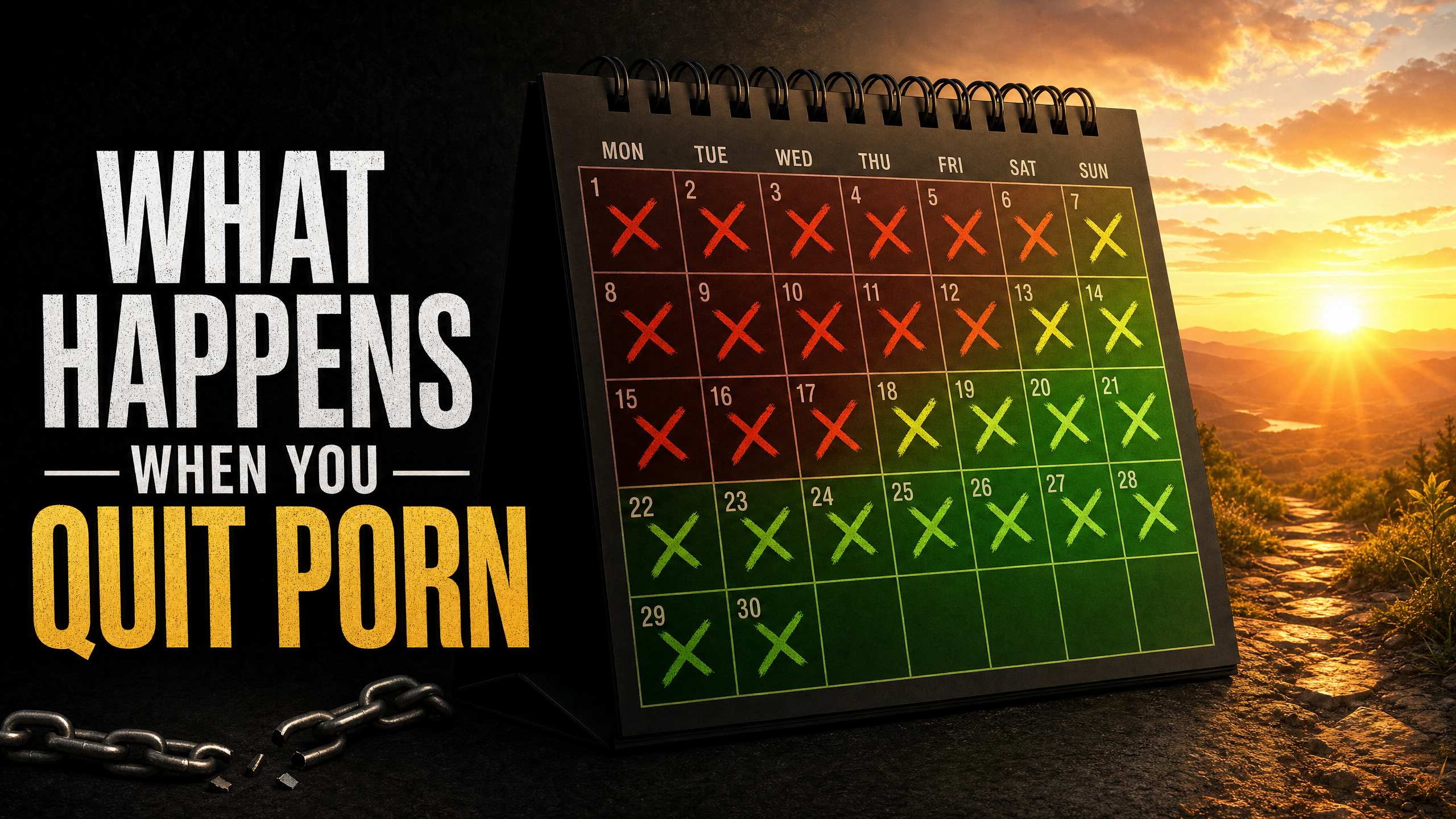
If stopping pornography is part of your goal, knowing what happens when you quit porn can help you approach the change with more realistic expectations.
The important point is that pornography and masturbation aren’t automatically the same issue. Focus on the specific pattern you’re trying to change.
How Long Does It Take to Stop Masturbating?
There is no fixed number of days it takes to change a masturbation habit. How long it takes depends on your routines, triggers, reasons for changing, and how consistently you practice new responses to urges.
Instead of focusing on a specific timeline, look for practical signs of progress:
- Are you recognizing your triggers earlier?
- Are you responding to urges differently?
- Are you spending less time on triggering content?
- Are you following your new routine more consistently?
- Is the behavior interfering less with your daily life?
These changes give you a better indication of progress than simply counting the number of days since you started.
When Should You Consider Professional Help?
If you repeatedly try to change your behavior but feel unable to control it, consider talking with a qualified mental health professional.
Professional support may be especially useful if sexual behavior is:
- Interfering with work, education, relationships, or daily responsibilities
- Causing significant distress
- Being used to cope with difficult emotions
- Taking up a large amount of your time
- Accompanied by anxiety, depression, or other emotional difficulties
A therapist can help you understand the underlying patterns and develop strategies that are appropriate for your situation.
Getting professional help isn’t a failure. It can be a practical step when changing a behavior on your own isn’t working.
Final Thoughts
Learning how to stop masturbating starts with understanding your triggers, changing routines, and finding healthier ways to respond to urges. If pornography is part of the pattern, reducing access to triggering content may also help. Progress may take time, and setbacks do not mean you have failed. Focus on making practical changes and building habits that support your goal. If the behavior feels difficult to control or affects your daily life, relationships, or well-being, consider seeking professional support.
People are also reading:
- Best Porn Addiction Recovery Apps (2026)
- Best NoFap Apps and Tools 2026
- BlockerPlus vs BlockerX: Which Is Better?
Frequently Asked Questions
1. Why doesn’t willpower alone help me stop masturbating?
Willpower can be difficult to rely on when urges are linked to routines, emotions, or environmental triggers. Identifying these triggers can make behavior change easier.
2. How do I figure out what triggers my urges?
Track when an urge occurs and note your mood, location, and activity. Over time, you may identify patterns such as boredom, stress, loneliness, or sexual content.
3. Does watching porn make it harder to stop masturbating?
For some people, pornography can act as a trigger or become closely associated with masturbation. If it is part of your pattern, reducing access may help.
4. What should I do instead when an urge hits?
Pause before acting and change your environment by putting your phone away, leaving the room, taking a walk, or starting another activity.
5. What if I relapse?
A setback does not erase your progress. Identify what triggered it, make a practical adjustment, and return to your routine without giving up.

Related Articles


BlockerPlus blocks content, tracks your streak, and keeps you accountable, free on Android & iOS.
Download Free